

Knowing the Difference: When to Repair vs. When to Replace Your HVAC System
For most homeowners in the Cedar Rapids area, the HVAC system is a set-it-and-forget-it appliance—until the day it stops working. Whether it’s the middle of a humid July afternoon or a sub-zero January night, a system failure is more than an inconvenience; it’s a threat to your home’s safety and your family’s comfort.
As we move through 2026, the technology in heating and cooling has advanced significantly. The decision to invest in a repair or commit to a full replacement is no longer just about whether the unit runs. It’s about efficiency, technology, and long-term financial strategy.
Here is the definitive guide to recognizing the red flags and deciding which path is right for your home.
The Warning Signs: When to Call for a Repair
Before a system fails completely, it usually spends weeks or even months sending out SOS signals. Recognizing these early can save you from a total system lockdown.
Unusual Noises
Your HVAC system should operate with a consistent, predictable hum. If you start hearing sounds that deviate from the norm, pay attention:
- Squealing or Screeching: Often indicates a failing blower motor belt or a bearing that has lost its lubrication.
- Banging or Clanking: Suggests something has come loose—perhaps a fan blade or a connecting rod—and is hitting other components.
- Clicking: If you hear rapid clicking when the system tries to start, it’s likely an electrical issue, such as a failing capacitor or a struggling relay.
Frequent Cycling
Does your AC or furnace turn on for three minutes, shut off, and then turn back on five minutes later? This is called “short-cycling.” It places an enormous amount of stress on the compressor and the heat exchanger. Often, this is caused by a simple sensor issue or a thermostat malfunction, but if left unaddressed, it will lead to a catastrophic motor failure.
Inconsistent Temperatures
If your living room feels like a sauna while your bedroom is a walk-in freezer, your system is struggling to distribute air. While this can sometimes be a ductwork issue, it can also mean your system’s blower motor is losing the strength to push air to the furthest reaches of your home.
The Breaking Point: When Replacement is the Right Move
Sometimes, continuing to repair an old unit is like “throwing good money after bad.” Here are the factors that suggest it’s time to retire the old unit and upgrade to a 2026 high-efficiency model.
The “Rule of 5,000”
In the HVAC industry, we use a simple mathematical formula to help homeowners decide. Multiply the age of the unit by the cost of the repair. If the total exceeds $5,000, replacement is almost always the better financial move.
- Example: A 12-year-old unit with a $500 repair ($6,000 total) is a prime candidate for replacement.
The Age Factor (10-15 Year Window)
Most modern air conditioners and heat pumps have a lifespan of 10 to 15 years, while furnaces can last up to 20. If your system is approaching the 15-year mark, even a “healthy” unit is likely operating at a fraction of its original efficiency. In 2026, the energy savings from a new SEER2-rated unit can often pay for a significant portion of the installation cost over the next few years.
High Utility Bills
If your energy bills have been creeping up year-over-year despite similar usage habits, your system’s internal components are likely degrading. Motors become less efficient, and coils become pitted or corroded, requiring more electricity to move the same amount of heat.
The Refrigerant Phase-Out
If your AC still runs on R-22 (Freon), you are operating on borrowed time. R-22 has been phased out due to environmental regulations. If your older R-22 system develops a leak, the cost to top it off is astronomical because the supply is so limited. In 2026, investing in a system that uses modern, eco-friendly refrigerants is the only way to ensure long-term serviceability.
The 2026 Advantage: Why Upgrade Now?
Upgrading your HVAC system in 2026 isn’t just about avoiding a breakdown; it’s about taking advantage of a technological leap in home comfort.
- Variable-Speed Technology: Older units were either On or Off. Modern 2026 units use variable-speed compressors that can run at 30% or 50% capacity, providing much more consistent temperatures and better dehumidification.
- Smart Integration: New systems are designed to communicate directly with your smart home hub, providing you with real-time health reports and air quality data.
Summary Checklist: Repair or Replace?
| Symptom | Usually a Repair | Time to Replace |
| System Age | Under 10 Years | Over 15 Years |
| Repair Cost | Under $500 | Over $1,500 |
| Energy Bills | Consistent | Rising 20% + |
| Comfort | Good in most rooms | “Hot” and “Cold” spots |
| Refrigerant | Modern R-32 | Old R-22 (Freon)/ R-410A |
Trust Through Measurement
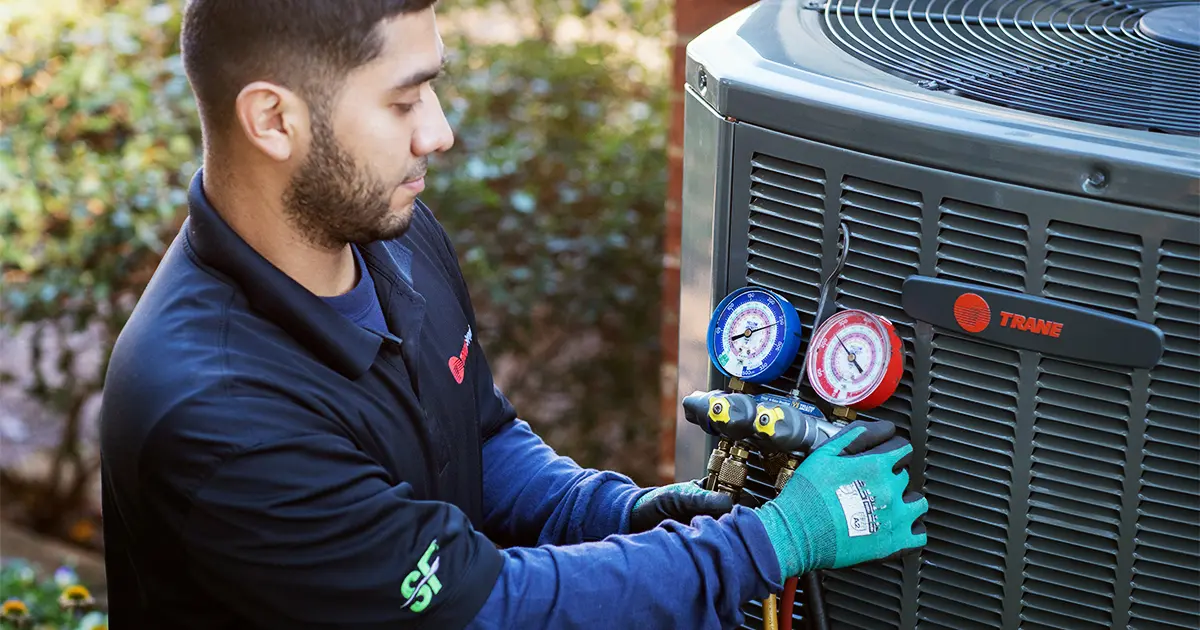
Don’t let a contractor guess with your comfort. At Colony Plumbing, Heating and Air Conditioning, we use advanced diagnostics—including static pressure testing—to show you exactly why your system is failing. Whether you need a quick sensor replacement to get through the week or a precision-sized LiDAR installation for the next 20 years, we provide the data you need to make the right choice for your family.
Is your system making strange noises or struggling to keep up with the Iowa weather? Call Colony today for a professional system health assessment!
