

If you are planning to list your home in the Cedar Rapids area this spring, there is a major update to the Iowa Seller Disclosure of Property Condition form that you cannot afford to ignore. As of January 1, 2026, the State of Iowa is now requiring all sellers of residential property to explicitly disclose the presence of lead service lines.
This isn’t just a minor technicality; it’s a legal requirement aimed at increasing transparency regarding the aging infrastructure hidden beneath our yards. At Colony, we believe that being “the guys you can trust” means giving you the tools to navigate these changes before they impact your home sale.
What Does the Law Require?
The new law updates the statute governing real estate disclosures. Previously, homeowners were not strictly required to identify their service line material unless they had personal knowledge of a defect. Now, every seller must mark one of three options on their disclosure form:
- Yes: The home has known lead service lines.
- No: The home does not have lead service lines.
- Unknown: The seller is unsure.
Why “Unknown” Can Be a Risk
While marking “Unknown” is legally permissible if you genuinely don’t know, it can be a red flag for modern buyers. In 2026, buyers are more educated than ever. A “No” backed by proof—such as a professional inspection record or a recent replacement receipt—is a significant selling point that signals a well-maintained, modern property.
Defining a “Lead Service Line”
The state’s definition is broader than many homeowners realize. According to the new law, a “Lead Service Line” includes:
- Any pipe made of pure lead.
- Any galvanized service line that is currently (or was ever) downstream of a lead pipe or a pipe made of unknown material.
The “service line” is the pipe that connects the public water main to your interior plumbing, typically ending at your water meter.
How to Identify Your Line: The Scratch and Magnet Test
You don’t necessarily need to dig up your yard to comply with the law. Most service lines are visible where they enter your basement or crawlspace before reaching the water meter. You can perform two simple tests to identify the material:
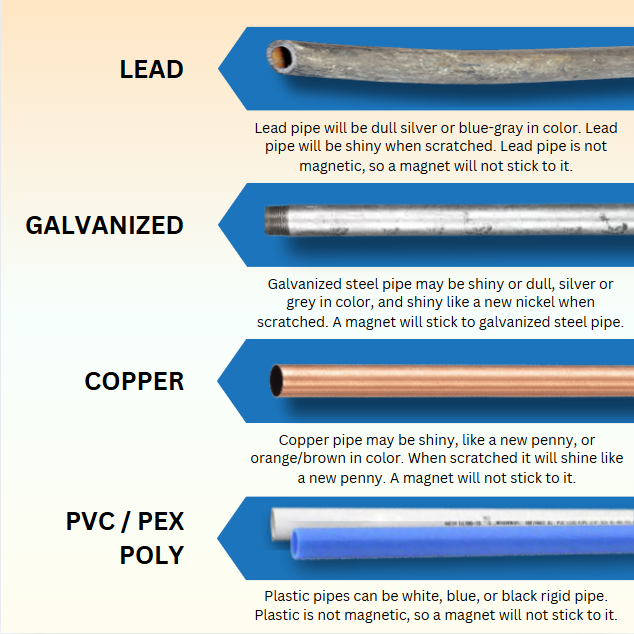
- The Scratch Test: Use a coin to gently scratch the surface of the pipe. If the scratch is shiny and silver, the pipe is likely lead. If it is bronze and shiny, it is copper.
- The Magnet Test: Attempt to stick a magnet to the pipe. A magnet will not stick to lead or copper, but it will stick to galvanized steel.
Proactive Inspection
If you live in an older neighborhood in Cedar Rapids—where lead lines were common before they were banned locally in 1971—guessing on your disclosure form is a liability. Failing to disclose correctly could lead to legal disputes or a buyer backing out of a contract within five days of receiving the disclosure.
By having a professional service line verification performed before you list, you can:
- Market with Certainty: Provide a verified “No” on your disclosure.
- Avoid Closing Scrambles: Prevent buyers from demanding a $5,000 credit at the last minute because they discovered a lead line during their own inspection.
- Coordinate with the City: Cedar Rapids is prioritizing the full replacement of lead lines.
The 10-Step Compliance Checklist for Sellers
If you are preparing to sell your home, don’t wait for a buyer’s inspector to find a surprise. Use this 10-step guide to verify your service line status and ensure your Disclosure Form is accurate and legally compliant.
- Locate the Entry Point: Find where the water main enters your home—usually through the basement floor or a crawlspace wall, typically near the water meter.
- Perform the Scratch Test: Use a coin or key to gently scratch the pipe before it reaches the meter. If the scratch is shiny and silver, the pipe is likely lead. If it’s the color of a penny, it’s copper.
- Perform the Magnet Test: Try to stick a refrigerator magnet to the pipe. A magnet will only stick to galvanized steel, not to lead or copper.
- Check for “Downstream” Galvanized Risk: Note if your indoor plumbing is galvanized steel. Under 2026 rules, if a galvanized line was ever downstream of a lead pipe, it may still be classified as a “Lead Status” line due to trapped lead particles.
- Review the City’s Inventory Map: Visit the City of Cedar Rapids Water Division’s online Lead Service Line Map. Search your address to see what the city’s records currently show for both the public and private sides of your line.
- Document with Photos: Take clear, well-lit photos of the pipe entry point, the scratch test results, and your water meter. These are invaluable for proving your “No Lead” status to skeptical buyers.
- Consult Your Real Estate Agent: Once you have your data, speak with your agent about the 2026 disclosure requirements. They will help you decide if you can confidently mark “No” or if “Unknown” is the safer legal choice.
- Research Municipal Funding: If you do identify a lead line, look into the Cedar Rapids Lead Service Line Replacement Program. The city often provides financial assistance or coordinated replacement efforts when they work on the public mains. Eligible Homeowners can sign up for a FREE replacement of their lead or galvanized iron service line by signing and submitting a Service Line Replacement Consent Form.
- Evaluate Indoor Water Quality: If a lead service line is suspected, consider having an indoor water quality test performed. This helps you understand if any lead is actually leaching into the home’s drinking water.
- Organize Your Records: Keep all your findings—test results, photos, and any communication with the city—on file. Providing this level of transparency to a buyer can often prevent them from asking for a price reduction later in the closing process.
Trust the Data, Not a Guess
Iowa’s real estate market in 2026 is driven by data. Whether you are buying or selling, the status of your water line is now a matter of public record and legal mandate. Don’t let a buried pipe jeopardize your home sale. Call Colony Plumbing, Heating and Air Conditioning, the experts who take the time to do the math and the measurements.
