

Why Your Home’s Ductwork is the Secret to HVAC Efficiency
The Invisible System
When most homeowners in Cedar Rapids think about home comfort, they focus on the shiny metal box sitting outside or the furnace in the basement. However, those units are only as good as the “vascular system” that carries the air. Your ductwork is the silent partner in your HVAC system; if it is poorly designed, your equipment is essentially trying to run a marathon while breathing through a straw.
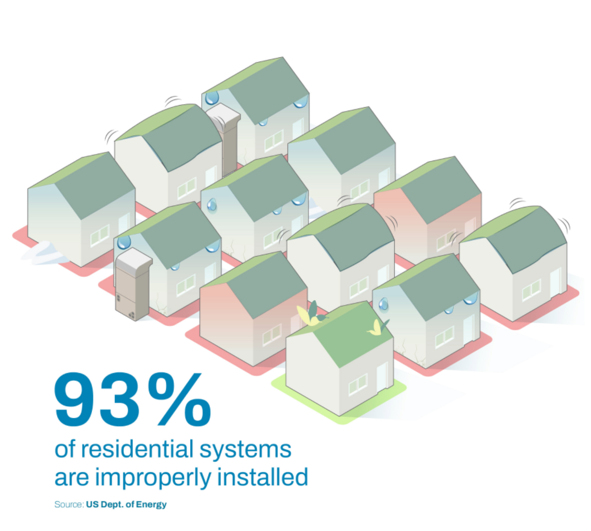
A startling industry statistic suggests that nearly 93% of residential systems are improperly installed, and the ductwork is often the primary culprit. If the “lungs” of your home are restricted, even a high-efficiency furnace will never perform at the level for which you paid.
The 30% Energy Tax
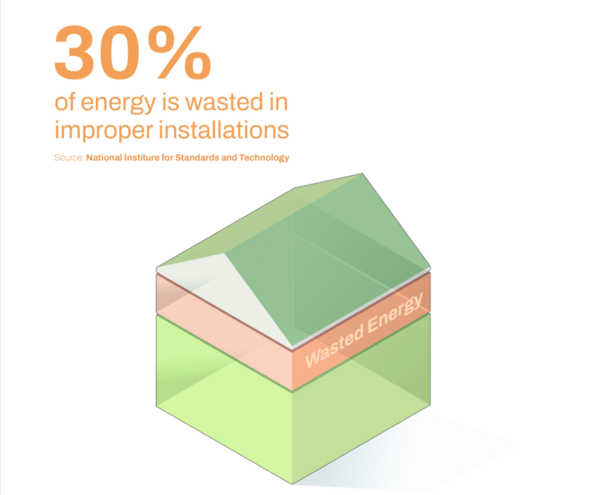
Research from the National Institute of Standards and Technology (NIST) and the U.S. Department of Energy indicates that improperly installed systems can overuse energy by 30%. For many homeowners, this translates to a monthly “energy tax” caused by structural defects that prevent air from reaching its intended destination.
When ducts are leaky or undersized, the HVAC system must work harder and run longer to reach the temperature set on the thermostat. This often leads to “short-cycling,” where the system turns off before completing a full operating cycle. This rapid on-and-off movement wears out expensive components like blower motors and heat exchangers years earlier than expected.
Common Signs of Duct Distress
Understanding the red flags of poor ductwork can help you identify why your home may feel uncomfortable:
- Temperature Disparity: If one room feels like a sauna while another is a walk-in freezer, the ductwork is likely unbalanced. This happens when duct runs are too long or have too many sharp bends for air pressure to overcome.
- The Dust Cycle: Leaky return ducts can pull in dusty air from unconditioned spaces like attics or crawlspaces and blast it into your living areas.
- Audible Turbulence: Whistling, rattling, or “whooshing” noises often indicate that ducts are improperly sized for the blower motor’s capacity.
- Static Pressure: High static pressure occurs when airflow meets resistance, forcing the system to consume more energy and increasing wear and tear.
The Colony Difference: LiDAR Technology and Trueflow testing
To avoid these issues, professional installers should follow the strict standards set by the Air Conditioning Contractors of America (ACCA), for duct design. This standardized method ensures that every room receives the precise amount of airflow required for its specific load.
What is LiDAR?
LiDAR, which stands for Light Detection and Ranging, is a remote-sensing technology that uses rapid pulses of laser light to measure distances with incredible accuracy. While radar uses microwaves and sonar uses sound, LiDAR uses light, which travels faster and provides much higher resolution for mapping a 3D environment.
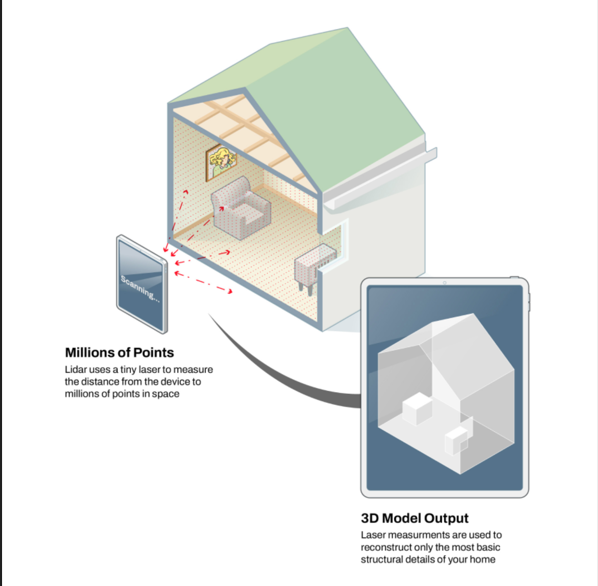
In a residential setting, a professional-grade LiDAR scanner (often integrated into advanced tablet software like Conduit) emits up to one million laser pulses per second. These pulses bounce off every surface in your home—walls, ceilings, windows, and existing vents—and return to a sensor that measures the exact time it took for the light to travel back.
What Does LiDAR Do for Your Ductwork?
Traditional duct design often relies on “rules of thumb” or incomplete as-built drawings that don’t account for reality. LiDAR eliminates this guesswork by creating a “Digital Twin”—a millimeter-precise, 3D replica of your home.
For your home’s air distribution system, LiDAR performs several critical functions:
- Identifies Spatial Constraints: It maps exactly how much room is available in your attic, basement, or crawlspace to route new ducts.
- Captures Existing Obstructions: It identifies where plumbing pipes, electrical conduits, or structural beams might block a necessary duct path.
- Verifies Geometry: It records ceiling heights and wall lengths automatically, ensuring that the volume of air required for each room is calculated with 100% accuracy.
The LiDAR Scan Process: Step-by-Step
- The Scan: A technician walks through each room with a LiDAR-equipped device, capturing the exact coordinates of every surface.
- The “Digital Twin”: The software creates a precise 3D replica of your home, recording floor-to-ceiling heights and structural details that manual measuring might miss.
- Engineering Integration: This data is used to design a duct layout that ensures air moves through your home with the least amount of resistance.
- Flow Optimization: By seeing a 3D model of your home’s structural obstructions (pipes, beams), we can route ducts to ensure the system doesn’t have to “fight” to move air.
Common Signs of Duct Distress
- Temperature Disparity: If some rooms feel like a sauna while others are freezing, the ductwork is likely unbalanced or leaking.
- The Dust Cycle: Leaky return ducts can pull in dusty air from unconditioned attics or crawlspaces and blast it into your living areas.
- Audible Turbulence: Whistling, hissing, or rattling noises often indicate that air is escaping through leaks or that ducts are improperly sized.
Trust Through Measurement
Don’t let a contractor guess with your comfort. At Colony Heating and Air Conditioning when we provide records to the owner and the city, we are proving that every step—from load calculation to control setup—was done to the highest professional standard.
